
Pack Right, Travel Far
Embarking on a safari in Tanzania is a once-in-a-lifetime experience. With its breathtaking landscapes, iconic wildlife, and rich cultures, Tanzania offers adventure-seekers an unparalleled journey into the wild. However, the key to an enjoyable and stress-free safari is thoughtful packing. Whether you’re planning to witness the Great Migration in Serengeti, explore the mystical Ngorongoro Crater, or relax on the beaches of Zanzibar after your safari, packing right is essential.
This ultimate, updated 2026 guide brings you the most comprehensive checklist for your Tanzania safari — ensuring you’re prepared for every moment, from dawn game drives to sunset dinners under the stars.
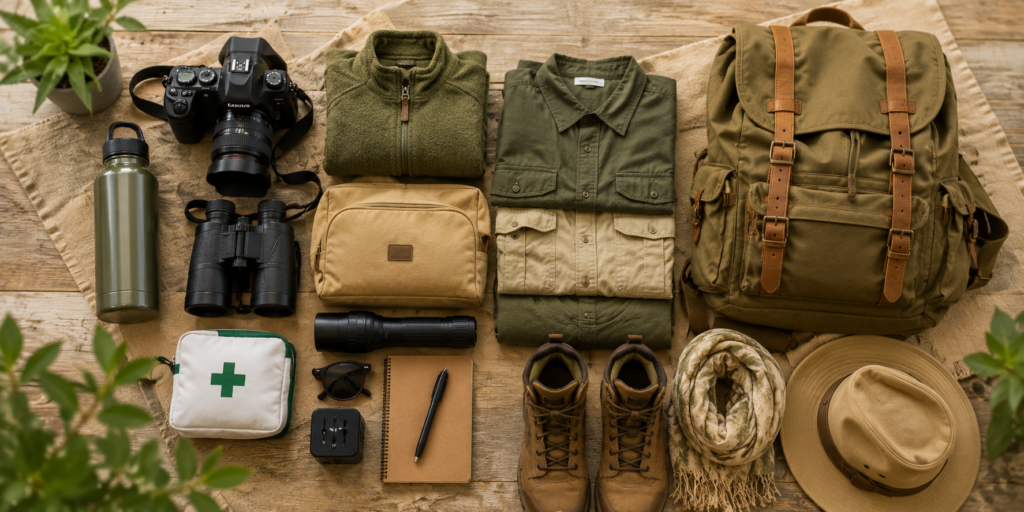
Understanding the Tanzania Safari Climate
Before you start filling your suitcase, it’s crucial to know what weather to expect:
- Dry Season (June–October): Cooler mornings and evenings, warm days, minimal rain.
- Wet Season (November–May): Rains peak from March to May (the “Long Rains”), with shorter rains around November–December.
- Temperature Range: Days typically range from 20°C to 30°C (68°F to 86°F); nights can drop to 10°C (50°F) in some areas.
- Altitude Variation: Higher elevations (like Ngorongoro) can be chilly, while lower plains (like Serengeti) are warmer.
Essential Safari Clothing
When it comes to safari clothing, comfort, functionality, and color are critical.
Key Clothing Principles
- Neutral colors: Khaki, olive, beige, and light browns blend with the environment and don’t attract insects.
- Avoid dark blue and black: These colors attract tsetse flies.
- Layering: Temperatures can swing widely between dawn and midday.
Safari Clothing Checklist
- Lightweight, long-sleeved shirts (3–4): Protects from sun and insects.
- Convertible cargo pants (2–3 pairs): Zip-off legs are practical for changing temperatures.
- Shorts (1–2 pairs): For relaxing at your lodge or during midday heat.
- T-shirts/tank tops (2–3): For layering or casual use.
- Fleece or light jacket (1): Essential for cool mornings/evenings.
- Packable rain jacket or poncho (1): Especially for the wet season.
- Wide-brimmed hat or cap: Sun protection is vital.
- Buff or lightweight scarf: Guards against dust and sun.
- Undergarments and socks (enough for duration): Moisture-wicking fabrics recommended.
- Swimsuit: Many lodges and camps have pools.
- Sleepwear: Lightweight and comfortable.
- Sturdy walking shoes/boots: Closed-toe and broken-in.
- Flip-flops or sandals: For showers or relaxing at camp.
- Evening wear: Some lodges have dress codes for dinner; a casual dress or smart-casual outfit can be handy.
Safari Gear & Accessories
Day Pack and Luggage
- Soft-sided duffel bag: Many safari vehicles and small planes have strict luggage restrictions (often 15 kg/33 lbs limit). Soft bags fit more easily.
- Daypack or backpack: For daily essentials on game drives.
Safari Essentials
- Binoculars (8×42 or 10×42): Vital for wildlife viewing.
- Camera with extra memory cards and batteries: A DSLR or mirrorless camera with a zoom lens (100-400mm) is ideal, but even smartphones can capture great shots in 2026!
- Travel adapter and power bank: Tanzania uses the UK-style plug (Type G) and operates on 230V.
- Flashlight or headlamp: For moving around camp at night.
- Reusable water bottle: Stay hydrated and cut down on plastic.
- Notebook & pen: For journaling or noting wildlife sightings.
- Dry bags or waterproof pouches: Protect electronics from dust and rain.
Health & Personal Care Items
Medications & Health Supplies
- Prescription medications: In labeled containers — bring enough for the entire trip.
- Anti-malarial medication: Consult your doctor well ahead of travel.
- Basic first-aid kit: Include plasters, antiseptic wipes, painkillers, antihistamines, and any personal items.
- Insect repellent (DEET or picaridin-based): Essential for warding off mosquitoes and tsetse flies.
- Sunscreen (SPF 30+): The African sun can be intense.
- Lip balm with SPF: Prevent chapped lips.
- Hand sanitizer & wet wipes: For hygiene in remote areas.
- Motion sickness tablets: For those prone to bumpy rides.
- After-bite or anti-itch cream: Just in case.
Toiletries
- Toothbrush & toothpaste
- Biodegradable soap/shampoo
- Personal hygiene products (tampons, pads, etc.)
- Razor, comb, or brush
- Deodorant
- Travel tissues
- Quick-dry travel towel (if not provided by camp)
Travel Documents & Money
- Passport (valid for at least 6 months beyond your return date)
- Tanzania visa: Many nationalities can apply online or get a visa on arrival.
- Vaccination certificate (especially yellow fever, if transiting from an endemic country)
- Travel insurance documents: Must cover medical evacuation.
- Flight tickets and itinerary
- Hotel/camp reservations
- Emergency contacts & copies of all documents (digital and paper)
- Credit/debit cards: Widely accepted in cities, but bring cash for remote areas.
- USD cash (small denominations): Useful for tips and smaller purchases.
- Pen: For filling out forms at immigration/customs.
Tech & Connectivity
- Phone & charger: With international roaming or a local SIM.
- Power bank: For charging on the go.
- E-reader or book: Ideal for downtime between game drives.
- Travel plug adapter: Tanzania uses Type G sockets.
- Headphones or earbuds
- Camera gear and accessories: Extra batteries, lens wipes, tripod if you’re a serious photographer.
Optional But Useful Extras
- Travel laundry detergent: For washing clothes in your room.
- Mini sewing kit: For quick repairs.
- Duct tape: Surprisingly handy for fixes on the go.
- Travel pillow and eye mask: For long flights or bumpy roads.
- Ziplock bags: For snacks, organizing, and keeping things dry.
- Snacks: Granola bars, nuts, or dried fruit for long days.
- Small gifts: For local guides or hosts (pens, soccer balls, etc.).
- Guidebook or wildlife identification book
- Map of the area: For context and orientation.
Packing for Special Activities
Walking & Night Safaris
- Sturdier boots: Over ankle support for walking safaris.
- Flashlight/headlamp with red filter: Red light disturbs animals less at night.
- Extra insect repellent and long-sleeved clothing
Gorilla or Chimp Tracking Extensions
If your itinerary includes primate trekking in western Tanzania (e.g., Mahale Mountains or Gombe Stream):
- Gardening gloves: Protects hands from prickly vegetation.
- Gaiters: For muddy/buggy trails.
- Light rain jacket: Forests are damp even in dry season.
Beach Extensions (Zanzibar or Mafia Island)
- Beachwear & swimsuit
- Snorkeling mask (if you prefer your own)
- Light cover-up or sarong
- Flip-flops or sandals
- Reef-safe sunscreen
- Hat & sunglasses
Sustainable Safari Packing Tips (2026 Edition)
Sustainability is more important than ever for eco-travelers in 2026. Here’s how you can minimize your footprint:
- Pack light: Reduces fuel use in small planes and vehicles.
- Bring reusable items: Water bottles, utensils, shopping bags.
- Use biodegradable toiletries: To protect fragile ecosystems.
- Choose solar-powered gadgets: E.g., solar lanterns, chargers.
- Respect local customs: Modest dress for villages and towns.
- Minimize single-use plastics: Avoid disposable wipes and packaging.
- Leave no trace: Take all litter home or dispose of it responsibly.
What Not to Pack
- Camouflage or military-style clothing: Illegal for civilians in Tanzania.
- Drones: Heavily regulated and often banned in national parks.
- Excessive valuables: Jewelry, lots of electronics, and large sums of cash are unnecessary and risky.
- Hairdryers: Most camps run on solar or generator power; high-wattage appliances are discouraged.
- Plastic bags: Banned in Tanzania since 2019.
Sample Packing List for a 10-Day Tanzania Safari
Here’s a ready-to-use checklist you can print or screenshot:
- 3–4 long-sleeved shirts (neutral colors)
- 2–3 pairs of convertible pants
- 1–2 pairs of shorts
- 1 fleece/light jacket
- 1 rain jacket/poncho
- 1 wide-brimmed hat/cap
- 1 scarf or buff
- Undergarments & socks (moisture-wicking)
- Swimsuit
- Sleepwear
- Sturdy closed shoes/boots
- Sandals/flip-flops
- Soft duffel bag (max 15 kg)
- Daypack/backpack
- Binoculars
- Camera & accessories
- Power bank & adapter
- Flashlight/headlamp
- Water bottle (reusable)
- First-aid kit & medications
- Insect repellent & sunscreen
- Toiletries
- Passport, visa, insurance
- USD cash/small denominations
- Copies of all documents
- Phone & charger
- Book/e-reader
- Snacks
Optional:
- Travel pillow, laundry soap, sewing kit, duct tape, guidebook, ziplock bags, gifts
Frequently Asked Questions
Can I do laundry on safari?
Many lodges and camps offer laundry services (sometimes included, often at a fee), but they may not wash undergarments. Quick-dry clothing is helpful if you plan to do your own washing.
How much luggage can I bring?
For flying safaris and bush flights, strict limits of 15 kg (33 lbs) per person in soft-sided bags are common. Check with your tour operator for specifics.
Are there shops to buy forgotten items?
Major cities like Arusha or Dar es Salaam have outdoor gear shops, but selection and prices can vary. Bring specialty items from home.
Are vaccinations required?
Yellow fever vaccination is mandatory if you’re arriving from a country with risk of transmission. Consult your doctor at least 6 weeks prior to travel for all recommended vaccines and medications.
What should I wear in the evening?
Evenings can be cool — bring a fleece or light jacket. For upscale lodges, smart-casual attire is appreciated at dinner.
Final Packing Tips for 2026 Travelers
- Test your gear: Try out shoes, cameras, and backpacks before you go.
- Pack early: Start at least a week ahead to avoid last-minute stress.
- Check airline & safari operator restrictions: Always confirm luggage size and weight limits.
- Bring spares: Extra batteries, memory cards, and chargers are invaluable.
- Stay organized: Use packing cubes or stuff sacks to group similar items.
Packing for a Tanzania safari in 2026 is about preparation, comfort, and respect for nature and local customs. By following this ultimate checklist, you’ll be ready for every sunrise game drive, every breathtaking wildlife encounter, and every magical African sunset.
Safe travels — and don’t forget your sense of wonder!