
Why Walk Stone Town? The Heart of Any Stone Town Guide
Stone Town is the historic heart of Zanzibar City and a UNESCO World Heritage Site. This Stone Town guide is written for travellers who want to explore on foot rather than rush through a checklist. The dense maze of coral-stone alleys, carved wooden doors, and layered history rewards slow walking more than vehicle tours.
Most visitors spend one or two nights here at the start or end of a Zanzibar beach holiday. A focused Stone Town walking tour of two to four hours covers the main sights; staying overnight lets you return in the cooler evening and experience Forodhani Gardens after dark. The 2-day Stone Town exploration is built exactly for this—guided walking plus time to absorb the old town without rushing.
This practical Stone Town Zanzibar guide covers the history, must-see sites, architecture, markets, a suggested walking route, and tips so you can explore confidently—whether you join a guided walk or go independently.
A Short History of Stone Town Zanzibar
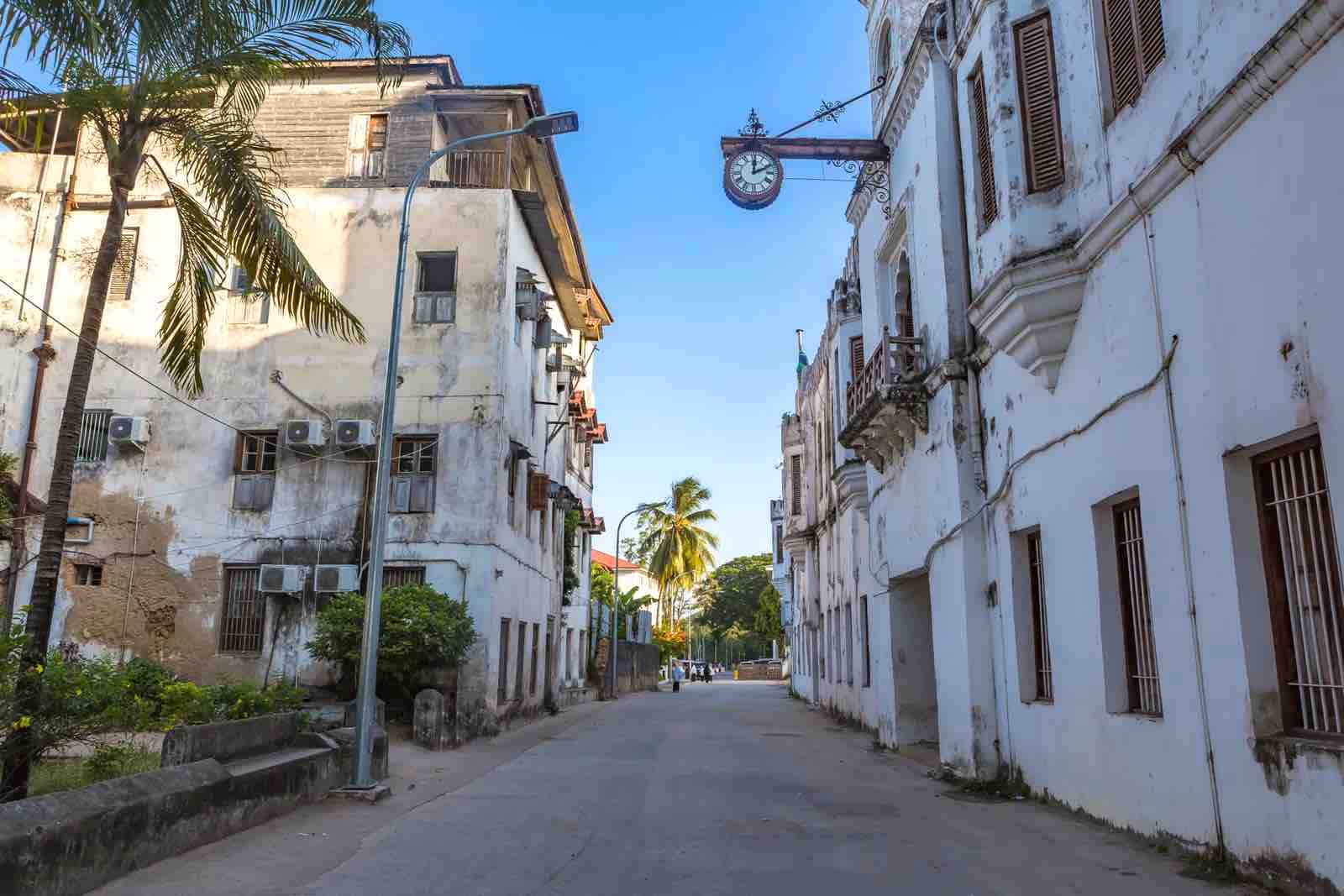
Stone Town grew as a trading centre linking Africa, Arabia, India, and Europe. Cloves, ivory, and, tragically, enslaved people passed through its harbour for centuries. Omani sultans made Zanzibar their capital in the 19th century; the British later established a protectorate. The result is a unique blend of Swahili, Arab, Persian, Indian, and European architecture still visible in the streets.
The old slave market site, now marked by the Anglican Cathedral, is one of the most sobering stops on any Stone Town walking tour. Understanding this history makes the rest of the walk more meaningful—the doors, the fort, and the waterfront all sit inside that larger story. Many travellers continue from here to a spice farm and Prison Island on a 3-day Stone Town, spice tour and Prison Island itinerary.
Must-See Sites on a Stone Town Walking Tour
These are the core stops most Stone Town guides recommend. You can cover them in a half-day walk.
Old Fort (Ngome Kongwe)
Built by the Omani Arabs in the late 17th century on the site of a Portuguese church. The thick coral-stone walls now enclose an open courtyard used for cultural events, craft stalls, and occasional performances. It is an easy starting point near the waterfront.
House of Wonders Area
Once the ceremonial palace of the Sultan, famous for being one of the first buildings in East Africa with electric lighting. Check current access in 2026—parts have been under restoration. Even from outside, the scale and location on the waterfront are impressive.
Anglican Cathedral & Slave Market Memorial
Built on the site of the last open-air slave market in the region. The cathedral and the small memorial nearby are essential for understanding Stone Town’s past. A respectful visit takes 20–30 minutes.
Forodhani Gardens
The waterfront park comes alive at sunset with food stalls selling grilled seafood, Zanzibar pizza, sugar-cane juice, and more. Ideal at the end of a daytime Stone Town walking tour.
Darajani Market
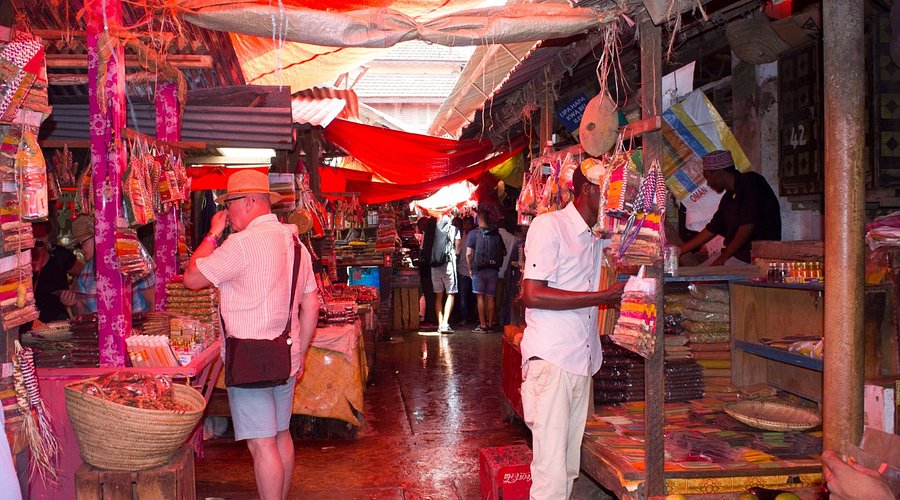
The main market for fruit, spices, fish, and everyday goods. Busy, colourful, and best visited in the morning. Keep belongings secure and enjoy the sensory overload.
Carved Doors & Architecture: What to Look For
Stone Town is famous for its elaborately carved wooden doors. Many date from the 19th century and signalled the wealth and status of the owner. Look for brass studs, chains, geometric and floral motifs, and Arabic inscriptions. Some doors are Indian-influenced; others show clear Omani or Swahili styles.
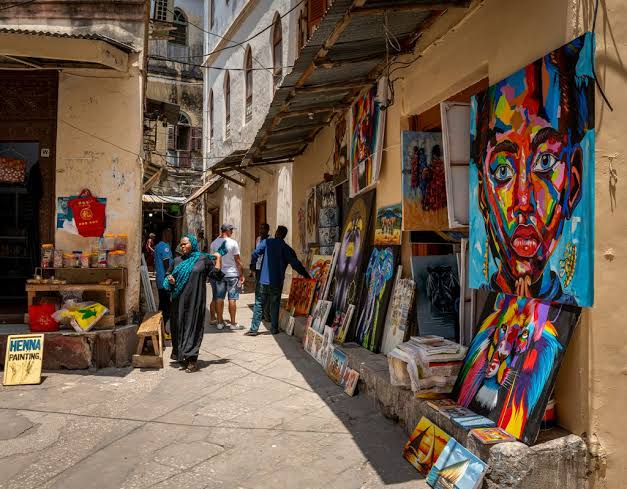
The buildings themselves are mostly coral rag stone, often with wooden balconies, courtyards, and flat or gently sloping roofs. Narrow alleys create shade and channel sea breezes—practical design in a hot climate. A good Stone Town guide or local guide will point out details you would otherwise walk past.
Markets, Spices & Street Food
Darajani Market is the main daytime market. For evening atmosphere, Forodhani Gardens is the place to eat. Try octopus or fish skewers, Zanzibar pizza (a local stuffed flatbread), and fresh sugar-cane juice. Spice stalls and small shops throughout the old town sell cloves, cinnamon, vanilla, and local soaps and oils—useful souvenirs if you prefer not to take a full spice-farm tour.
Bargaining is expected in markets but keep it friendly. Fixed prices are more common in established restaurants and hotels.
Suggested Stone Town Walking Route
A simple loop that covers the highlights in roughly 2–3 hours (longer if you linger):
- Start at the Old Fort / waterfront near Forodhani Gardens.
- Walk to the House of Wonders area and along the seafront.
- Cut inland through the alleys toward the Anglican Cathedral and Slave Market memorial.
- Continue to Darajani Market (morning is best).
- Wander the surrounding lanes looking at doors and balconies.
- Return to Forodhani for sunset and street food.
A guided Stone Town walking tour follows a similar path but adds historical context and navigates the maze efficiently. Independent walkers should carry a simple map or offline map app—alleys can feel disorienting at first. You can book a structured Stone Town exploration that already includes the key sites with a local guide.
Practical Tips for Exploring Stone Town
- Timing: Start early (7:30–9:00 AM) before heat and crowds build. Late afternoon is also pleasant.
- Dress: Cover shoulders and knees out of respect for local culture. Light, breathable fabrics work best.
- Shoes: Comfortable closed or sturdy sandals—streets are uneven coral stone and can be slippery.
- Guides: A licensed guide (often $25–40 for 2–3 hours) adds significant value, especially for first-time visitors.
- Safety: Stone Town is generally safe by day. Keep valuables secure, avoid isolated alleys at night, and use registered taxis after dark.
- Photography: Ask before photographing people. Doors and architecture are fair game.
- Money: Small USD notes or Tanzanian shillings for markets and tips. Cards work in larger hotels and some restaurants.
How Long to Spend in Stone Town
A half-day Stone Town walking tour covers the essentials. One full night lets you experience the evening atmosphere at Forodhani and start fresh the next morning. Two nights are ideal if you also want a spice tour, Prison Island, or simply a slower pace before heading to the beaches.
Many Zanzibar packages include one or two nights in Stone Town before or after the beach. Options include the dedicated 2-day Stone Town exploration, the 3-day Stone Town, spice tour & Prison Island experience, and the 5-day Matemwe Coast & Stone Town escape.
Stone Town Guide FAQs
Is a guided Stone Town walking tour worth it?
Yes for most first-time visitors. Guides explain the history behind the doors, fort, and slave-market site and help you navigate the alleys efficiently. Independent walking is still enjoyable if you prefer to roam freely.
How long does a typical Stone Town walking tour take?
Most guided walks last 2–3 hours and cover the main sites. You can easily spend half a day if you add the market and a leisurely pace.
What are the main things to do in Stone Town?
Walk the historic alleys, visit the Old Fort, Anglican Cathedral/slave-market site, Forodhani Gardens at sunset, Darajani Market, and look for the famous carved doors. Many people also add a spice tour or Prison Island—see the 3-day combination package or the longer 5-day Matemwe Coast + Stone Town escape if you want beach time as well.
Is Stone Town safe to walk alone?
Yes during the day in the main tourist areas. Use normal city precautions, keep valuables out of sight, and take registered transport at night.
Can I visit Stone Town as a day trip from the beaches?
Yes, but an overnight stay is more rewarding. Day trips are possible from Nungwi or the east coast with a private transfer or organised tour. If you prefer a ready-made cultural stay before the beach, the 5-day Matemwe Coast & Stone Town package links both.
Add Stone Town to Your Zanzibar Package
Stone Town is the cultural counterpoint to Zanzibar’s beaches. Whether you want a focused 2-day exploration or one or two nights as part of a longer beach holiday, Tanzania Wildlife Adventures can include it in your itinerary.
Add Stone Town to Your Zanzibar Package →
2-Day Stone Town ·
3-Day Stone Town Experience ·
5-Day Matemwe Escape ·
Plan your trip