
Why Your Route Choice Matters More Than You Think
Standing at 5,895 meters (19,341 feet), Mount Kilimanjaro is the highest peak in Africa and the tallest freestanding mountain on Earth. Every year, roughly 40,000 people attempt to reach Uhuru Peak. But here is the truth most people do not realize until it is too late: the route you choose has a bigger impact on whether you summit than your fitness level.
Altitude sickness does not care how many marathons you have run. It hits indiscriminately. The only proven defense is time — more days on the mountain means more oxygen for your body to adjust. A five-day rush up Marangu can leave even elite athletes turning back at Gillman’s Point. An eight-day stroll up Lemosho gives casual hikers a genuine shot at the summit.
Beyond survival, your route shapes your entire experience. Do you want to sleep in huts or tents? Do you crave solitude or the energy of a busy trail? Are you a photographer chasing the perfect sunrise over the Shira Plateau, or a budget traveler looking for the cheapest way to the top? This guide answers all of that.
We focus on the four most popular routes — Marangu, Machame, Lemosho, and Rongai — because these are the trails 95% of climbers actually use. By the end, you will know exactly which one fits your timeline, budget, fitness, and dreams.
Kilimanjaro Routes at a Glance: Side-by-Side Comparison
Before we dive into each route, here is the big picture. This table distills the essentials — days, distance, difficulty, cost, success rate, scenery, and crowd level — so you can scan and compare instantly.
| Route | Duration | Distance | Difficulty | Cost (USD) | Success Rate | Scenery | Crowds |
|---|---|---|---|---|---|---|---|
| Marangu | 5–6 days | 72 km | Easiest terrain | $2,200–$2,900 | 42–56% | ★★★☆☆ | High |
| Machame | 6–7 days | 62 km | Moderate–Hard | $2,500–$3,500 | 88–92% | ★★★★★ | Very High |
| Lemosho | 7–8 days | 70 km | Moderate | $2,800–$4,200 | 96–98% | ★★★★★ | Low–Medium |
| Rongai | 6–7 days | 73 km | Moderate | $2,600–$3,800 | 80% | ★★★★☆ | Low |
Key takeaway: Longer routes win on success rate every single time. The 5-day Marangu averages just 42% summit success. The 8-day Lemosho hits 98%. That gap is not luck — it is biology. More days equals more acclimatization, and acclimatization is everything on Kilimanjaro.
Marangu Route: The “Coca-Cola Route” — Simple, Cheap, but Risky
Marangu is Kilimanjaro’s oldest and most established trail. It is the only route that offers hut accommodation — communal A-frame buildings with bunk beds and indoor dining — which makes it appealing if the idea of sleeping in a tent makes you nervous. The trail has a gradual, steady incline, and the path is well-maintained. On paper, it looks like the easiest way up.
Why People Choose Marangu
The huts are the biggest draw. After a long day of walking, you get a roof over your head, a mattress, and walls that block the wind. It feels safer and more comfortable than pitching a tent on rocky ground. Marangu is also typically the cheapest route because the 5-day itinerary requires fewer porters, less food, and lower park fees.
The trail starts at Marangu Gate (1,843m) and ascends through lush rainforest before reaching the heath and moorland zone. You pass Mandara Hut and Horombo Hut before the final push to Kibo Hut and the summit. The descent follows the exact same path, which means you see the same scenery twice.
The Hidden Problem: Success Rate
Here is where Marangu falls apart. The standard 5-day itinerary gives your body almost no time to adjust to altitude. You go from 1,843 meters to 5,895 meters in just three and a half days of actual climbing. That is a recipe for altitude sickness, and the statistics prove it: the 5-day Marangu has a summit success rate of roughly 42%.
The 6-day version, which adds an acclimatization day at Horombo Hut, pushes success rates up to around 56%. That is better, but it still lags far behind Machame and Lemosho. If you are set on Marangu, book the 6-day option at minimum. Even then, the “climb high, sleep low” principle is missing — you sleep at the same altitude you reach each day, which is not ideal for acclimatization.
Scenery and Crowds
Because you ascend and descend on the same trail, the scenery feels repetitive. You miss the dramatic Barranco Wall, the sweeping views of the western approach, and the variety of landscapes that make other routes unforgettable. Crowds are high year-round because Marangu is heavily marketed as the “easy” route, attracting large groups and budget operators.
Best for: Trekkers who absolutely need hut accommodation, or those on a tight budget who accept the lower summit odds. Avoid if: Summit success is your priority, or you want varied scenery.
Machame Route: The “Whiskey Route” — Popular, Scenic, and Demanding
Machame is the most popular route on Kilimanjaro, handling roughly 35% of all climbers. Nicknamed the “Whiskey Route” (to Marangu’s “Coca-Cola”), it is steeper, more varied, and far more rewarding than Marangu. If you have a reasonable fitness level and want a classic Kilimanjaro experience with excellent scenery, Machame is the default choice.

The Machame Experience
The trail starts at Machame Gate (1,640m) on the mountain’s southern slope. You climb through dense rainforest, emerge onto the Shira Plateau with its otherworldly volcanic landscape, tackle the famous Barranco Wall — a steep but non-technical scramble — and cross the Karanga Valley before the final push from Barafu Camp.
The 7-day itinerary is the sweet spot. It includes a crucial acclimatization day where you climb to Lava Tower (4,630m) and then descend to sleep at Barranco Camp (3,960m). This “climb high, sleep low” day is the secret weapon that gives Machame its strong success rate of around 88–92% on the 7-day plan.
Difficulty and Physical Demand
Machame route difficulty sits at moderate-to-hard. The days are long — often 6 to 8 hours of walking — and the Barranco Wall requires scrambling over rocks while carrying your daypack. The summit night is brutal no matter which route you take, but Machame reaches the crater rim at Stella Point, which is less than an hour’s walk from Uhuru Peak. This shorter final push is a genuine advantage over routes that reach the rim farther from the summit.
The Crowd Factor
Popularity is Machame’s biggest weakness. The trail can feel like a highway during peak season (July–August and December–February). You will share campsites with dozens of other groups, and the summit night can feel like a conga line of headlamps stretching into the darkness. If you thrive on energy and camaraderie, this is fine. If you want solitude, look elsewhere.
Best for: Fit beginners and intermediate trekkers who want great scenery and a strong success rate. Avoid if: You hate crowds or want the easiest possible route.
Lemosho Route: The Scenic Champion and Summit Success King
If you ask experienced guides and repeat climbers which route they would recommend to a friend, most will say Lemosho. It is widely considered the best Kilimanjaro route for first-timers because it combines the highest success rates, the most beautiful scenery, and a manageable difficulty level. Yes, it costs more and takes longer. But on a mountain where failure means turning back at 5,000 meters with altitude sickness, those extra days are an investment, not an expense.
Why Lemosho Leads the Pack
Lemosho starts on the western side of the mountain at Londorossi Gate (2,360m). The first two days take you through remote rainforest where you might spot colobus monkeys and other wildlife — something you rarely see on the busier southern routes. You then cross the Shira Plateau, a vast, flat volcanic highland that feels like walking on another planet.
The 8-day itinerary is the gold standard. It gives your body maximum time to acclimatize, includes the climb-high sleep-low day at Lava Tower, and spreads the physical load across more days. The result? Summit success rates of up to 98%. That is not a marketing number — it is the statistical reality of giving your body enough time to produce the extra red blood cells it needs at altitude.
Scenery That Just Keeps Giving
Lemosho traverses all five of Kilimanjaro’s ecological zones: rainforest, heath, moorland, alpine desert, and arctic summit. The views are constantly changing. One moment you are in a moss-covered forest; the next, you are staring across a sea of clouds from the Shira Plateau. The Barranco Wall, the Southern Icefields, and the final approach to Uhuru Peak all feel earned and spectacular.
Crowds and Cost
For the first three days, Lemosho is quiet. You might see only a handful of other groups. After joining the Machame trail near Lava Tower, crowds increase, but by then you have already enjoyed the wilderness feel. The downside is cost: the longer itinerary and remote starting point mean higher park fees, more porters, and more food. Expect to pay $2,800 to $4,200 depending on your operator and group size.
Best for: First-timers, photographers, anyone who wants the highest possible chance of summiting. Avoid if: You are on a very tight budget or cannot spare 7–8 days.
Rongai Route: The Quiet Northern Approach for Solitude Seekers
Rongai is the only route that approaches Kilimanjaro from the north, near the Kenyan border. It is the driest trail on the mountain, making it the best choice if you are climbing during Tanzania’s rainy seasons (April–May or November). It is also the quietest of the four major routes, receiving only a fraction of the traffic that Machame and Marangu see.
The Rongai Experience
The trail starts at Rongai Gate (1,950m) and climbs gradually through farmland and pine forest before entering the mountain’s rain shadow. The northern slopes are drier and less vegetated than the south, which means fewer mosquitoes in the forest zone and less mud during wet months. You pass through Rongai Cave and Second Cave before reaching Mawenzi Tarn, where you get stunning views of Mawenzi Peak — Kilimanjaro’s dramatic second summit.
After summiting via the same final approach as Marangu, you descend on the Marangu trail, giving you a rare chance to see both the northern and southern faces of the mountain.
Acclimatization and Success Rate
The 7-day Rongai itinerary has a solid 80% success rate. The trail is gentle and steady, which is easier on the legs than Machame’s steeper days. However, Rongai lacks a natural “climb high, sleep low” day in the early stages. The route stays relatively flat before the final push, which means less dramatic altitude variation to help your body adjust. It is still far better than Marangu, but not quite as forgiving as Lemosho or Machame.
Scenery and Solitude
Rongai’s scenery is different — not worse, just different. The northern slopes are drier, with more open terrain and less dense forest. You will not get the lush rainforest of Machame or the volcanic drama of the Shira Plateau, but you will get wide-open views, unique perspectives of Mawenzi, and a sense of wilderness that the southern routes lost years ago.
Best for: Climbers visiting in the rainy season, those who value solitude, or anyone wanting a quieter, gentler ascent. Avoid if: You want the most dramatic scenery or the highest possible success rate.
Difficulty Levels Explained: Which Route Matches Your Fitness?
Kilimanjaro is a non-technical trek. You do not need ropes, ice axes, or climbing experience. But do not let the word “trek” fool you. Summit night is a 6 to 8 hour march in freezing darkness at extreme altitude. Every route demands respect. Here is how the difficulty breaks down in real terms.
Marangu — Easiest Terrain, Hardest Altitude
The walking itself is gentle. The path is wide, the gradient is steady, and there are no technical sections. But the 5-day schedule is brutal on your body. Altitude sickness is the real enemy here, and Marangu gives you the least time to fight it. Think of Marangu as easy walking with a hard deadline.
Machame — Moderate to Hard
The days are longer and steeper than Marangu. The Barranco Wall requires scrambling. The 7-day version is manageable for anyone with reasonable fitness, but the 6-day version cuts out the acclimatization day and drops success rates significantly. Machame route difficulty is real — this is not a stroll.
Lemosho — Moderate
Despite being longer, Lemosho is actually easier on the body than Machame because the days are shorter and the pace is slower. The extra time means less daily strain and better recovery. The 8-day itinerary is the most forgiving major route on the mountain. If you are worried about your fitness, this is your safest bet.
Rongai — Moderate
The gentle, steady gradient makes Rongai physically easier than Machame. There are no steep scrambles or long, punishing descents. The challenge is the final summit night, which is tough on every route. Rongai’s moderate difficulty makes it a good middle ground for trekkers who want a quieter trail without the physical demands of Machame.
Cost Breakdown: What You Actually Pay Per Route in 2025
Price is always a factor, but on Kilimanjaro, cheap can be dangerous. Budget operators cut corners on guide training, food quality, safety equipment, and porter welfare. The result is a higher risk of altitude sickness, summit failure, or worse. Here is what you should realistically budget.
| Route | Duration | Low-End Estimate | Mid-Range Estimate | Luxury Estimate |
|---|---|---|---|---|
| Marangu | 5–6 days | $2,200 | $2,500 | $2,900 |
| Machame | 6–7 days | $2,500 | $2,850 | $3,500 |
| Lemosho | 7–8 days | $2,800 | $3,150 | $4,200 |
| Rongai | 6–7 days | $2,600 | $2,950 | $3,800 |
What is included: Park fees, camping or hut accommodation, all meals, guides, porters, cooks, and emergency support. What is NOT included: International flights ($600–$1,200), Tanzania visa ($50–$100), travel insurance ($100–$300), gear rental ($100–$200), and tips for your crew ($200–$400).
Pro tip: The cheapest quote is rarely the best value. A reputable operator with Wilderness First Responder certified guides, proper safety equipment, and fair porter wages will cost more upfront but dramatically improves your safety and summit odds.
Summit Success Rates: The Numbers That Should Guide Your Decision
Success on Kilimanjaro is a math problem, and the variable is time. The data is unambiguous: every extra day on the mountain significantly increases your chance of reaching Uhuru Peak. Here are the real numbers.
| Route & Duration | Approximate Success Rate | Why It Works (or Doesn’t) |
|---|---|---|
| Marangu 5 days | 42% | Too fast, poor acclimatization |
| Marangu 6 days | 56% | Better, but still limited |
| Machame 6 days | 88% | Good, but misses acclimatization day |
| Machame 7 days | 92% | Climb-high sleep-low day included |
| Rongai 7 days | 80% | Steady pace, but less altitude variation |
| Lemosho 7 days | 96% | Excellent acclimatization profile |
| Lemosho 8 days | 98% | Maximum time for adaptation |
The pattern is clear. Routes under 6 days are gambles. Routes of 7 days or more are investments in your summit. The 8-day Lemosho is the statistical champion, but the 7-day Machame is also excellent and more affordable. If you can only spare 6 days, Machame 6-day is far better than Marangu 6-day.
Crowds vs Scenery: Finding Your Perfect Balance
Some climbers want energy and camaraderie. Others want to feel like they have the mountain to themselves. Here is how the four routes compare on the two factors that shape your daily experience.
Scenery Rankings
1. Lemosho: Traverses all five ecological zones. Rainforest, Shira Plateau, Barranco Wall, Southern Icefields — it has everything. The most photogenic route by a wide margin.
2. Machame: Nearly as scenic as Lemosho, sharing the Barranco Wall and Shira Plateau. The only reason it ranks second is the lack of the remote western rainforest start.
3. Rongai: Different scenery — drier, more open, with unique Mawenzi views. Less dramatic than the southern routes but beautiful in its own way.
4. Marangu: Ascent and descent on the same trail means repeated scenery. You miss the Barranco Wall, the western approach, and much of the volcanic drama.
Crowd Rankings (Lowest to Highest)
1. Rongai: The quietest major route. Only about 1,400 hikers per year. You will have campsites to yourself on many nights.
2. Lemosho: Quiet for the first three days, then joins the Machame trail. The early solitude is a genuine luxury.
3. Marangu: Busy, but the huts absorb crowds better than campsites. You will share facilities but the trail itself is wide.
4. Machame: The busiest route on the mountain. Over 16,000 hikers per year. Summit night can feel crowded. If you love energy, this is perfect. If you want peace, look elsewhere.
Frequently Asked Questions: Kilimanjaro Routes 2025
What is the best Kilimanjaro route for a first-timer?
The 8-day Lemosho Route is the top recommendation for first-timers. It offers the highest success rate (up to 98%), the most beautiful scenery, and a manageable daily pace that gives your body time to acclimatize. If budget is tighter, the 7-day Machame Route is an excellent alternative with a 92% success rate.
How difficult is the Machame route really?
Machame route difficulty is moderate-to-hard. The days are long, the Barranco Wall requires scrambling, and the summit night is grueling regardless of fitness. However, the 7-day itinerary includes an acclimatization day that makes it achievable for most people with reasonable fitness and mental determination. It is harder than Marangu’s terrain but far more rewarding.
Is the Marangu route really the easiest?
Only in terms of walking terrain. The path is gentle and well-maintained, and the huts are comfortable. But the 5-day schedule is the hardest on your body because it allows almost no time for altitude acclimatization. The 42% success rate tells the real story. If you want an “easy” summit, choose a longer route like Lemosho 8-day.
How much does a Kilimanjaro climb cost in 2025?
Realistic costs range from $2,200 (budget Marangu) to $4,200+ (luxury Lemosho). Mid-range operators charge $2,500–$3,500 for Machame or Lemosho. Be wary of quotes under $2,000 — they usually cut corners on safety, food, guide training, or porter welfare. Your life is worth more than a few hundred dollars in savings.
Which route has the highest summit success rate?
The 8-day Lemosho Route leads with up to 98% success rate, followed by the 7-day Machame at 92%. The 9-day Northern Circuit also exceeds 95%. The common thread is time — more days on the mountain equals better acclimatization and higher odds of standing on Uhuru Peak.
Which route is best for climbing in the rainy season?
The Rongai Route is your best bet during Tanzania’s rainy seasons (April–May and November) because it approaches from the drier northern side of the mountain. The Marangu Route is also a decent option because the huts provide shelter from rain, though the trail itself will be muddy.
Do I need prior trekking experience?
No. Kilimanjaro is a trekking peak, not a technical climb. You do not need ropes or mountaineering skills. However, you do need cardiovascular fitness, mental toughness, and the willingness to walk 6 to 8 hours per day for a week. Training with loaded hikes and stair climbing for 2 to 3 months before your trip makes a huge difference.
Can I climb Kilimanjaro without a guide?
No. Tanzanian law requires all climbers to be accompanied by a licensed guide. This has been mandatory since 1991. A reputable operator provides guides, porters, cooks, and safety equipment. Going with a cheap, unlicensed operator is illegal and dangerous.
What is summit night actually like?
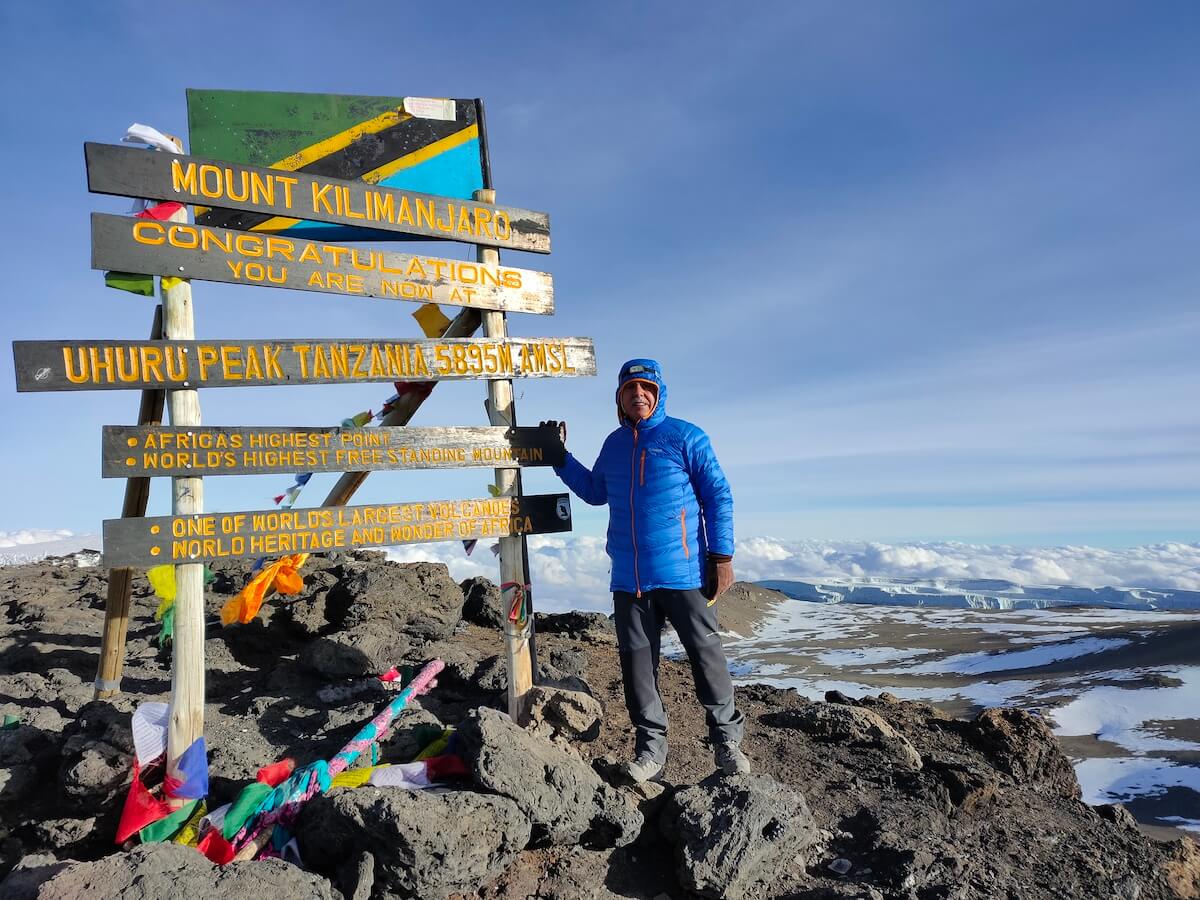
Summit night is the hardest part of any route. You start around midnight from a high camp like Barafu (4,673m). You walk for 6 to 8 hours in freezing darkness, gaining over 1,200 vertical meters to reach the crater rim. The air is thin, the cold is biting, and every step feels heavy. But when the sun rises and you see the glaciers glowing orange, and then you reach that wooden sign at Uhuru Peak — it is the most rewarding moment of your life.
How far in advance should I book?
Book 6 to 12 months ahead for peak season (July–August, December–February) to secure the best operators and preferred dates. For shoulder seasons (June, September–November), 3 to 6 months is usually sufficient. Last-minute bookings are possible but limit your route and operator choices.
Is it worth paying more for a longer route?
Absolutely. Every extra day on the mountain is an investment in your summit success, your safety, and your enjoyment. The difference between a $2,200 Marangu 5-day and a $3,200 Lemosho 8-day is not just scenery — it is the difference between a 42% chance and a 98% chance of reaching the Roof of Africa. That is worth every dollar.
Stop 12 · Begin Your Ascent
Choose Your Route and Book with Africa Paradise Adventures
The mountain does not care which route you pick. But your body, your budget, and your memories will. Whether you want the scenic perfection of Lemosho, the classic energy of Machame, the quiet solitude of Rongai, or the hut comfort of Marangu, the right route is the one that gets you to Uhuru Peak safely.
Africa Paradise Adventures specializes in Kilimanjaro climbs on all four major routes. Our Wilderness First Responder certified guides, fair porter practices, and transparent pricing take the guesswork out of your expedition. We will help you choose the perfect route, train properly, and summit with confidence.


